AcuMed Clinic · Sarasota, FL
Plantar Fasciitis Treatment in Sarasota, FL | Heel Pain Relief
Sharp heel pain with your first steps in the morning — drug-free, evidence-informed care that addresses the cause, not just the symptom.
Plantar fasciitis is one of the most common causes of foot pain — and one of the most frustrating. That sharp, stabbing heel pain with the first steps out of bed, the ache that returns after standing too long or walking barefoot across tile, the way it quietly starts limiting the activities you love. At AcuMed Clinic in Sarasota, we treat plantar fasciitis with a multi-modal, drug-free approach designed to address what is actually driving the problem, not just manage the pain.
Written and reviewed by Dr. Katrina Chojnicki-Hill, DAOM, AP — Licensed Acupuncture Physician, Sarasota, FL
What Is Plantar Fasciitis?
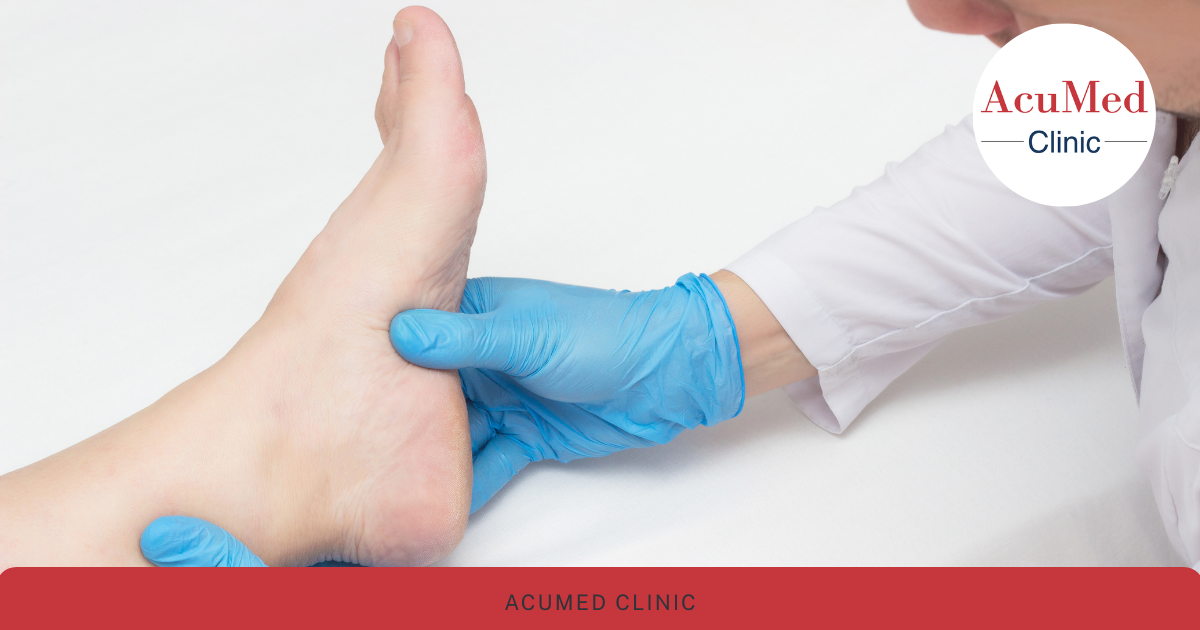
Plantar fasciitis involves irritation of the plantar fascia — a strong band of connective tissue that runs along the bottom of the foot from the heel toward the toes. The fascia helps support the arch and absorbs stress during movement. When it becomes overloaded or sensitized, pain develops near the heel, often described as sharp, stabbing, bruised, tight, or burning.
The classic pattern is pain with the first steps in the morning or after sitting for a period of time. The discomfort may ease once you get moving, then return after prolonged walking, standing, or activity. For Sarasota patients, symptoms often show up during beach walks, golf, pickleball, tennis, or simply getting through a day of errands — making it harder to stay active in the ways that matter most.
Why Plantar Fasciitis Persists — and Why Rest Alone Doesn't Fix It
Plantar fasciitis rarely has a single cause. It develops from a combination of stress load, tissue sensitivity, foot mechanics, calf tightness, ankle mobility, footwear, and movement patterns. Common contributors include sudden increases in activity, prolonged standing, hard floor surfaces, worn-out shoes, tight calves, high arches or flat feet, and compensation from pain elsewhere in the lower body.
Rest alone often fails because it does not address the tissue dysfunction or the compensatory patterns that develop when you change how you walk to avoid pain. When these patterns go uncorrected, the calf, knee, hip, and even the lower back can begin to take on additional strain. A treatment plan that directly addresses the fascia, the surrounding musculature, and the mechanical contributors tends to produce more durable results than rest and stretching alone.
Acupuncture for Plantar Fasciitis
Acupuncture has a documented clinical role in treating plantar fasciitis. Needles placed along the kidney, bladder, and spleen meridians — which traverse the heel, arch, and ankle — have specific application for plantar heel pain. Acupuncture reduces local inflammation, modulates pain signaling, and promotes circulation to the fascia and surrounding tissues. It also addresses trigger points in the calf and intrinsic foot muscles that contribute to the tension load on the plantar fascia.
At AcuMed Clinic, Dr. Kitt designs individual treatment protocols based on your pain pattern, activity level, and contributing factors — not a single standard protocol. Most plantar fasciitis patients see meaningful improvement within 6–8 sessions. Chronic or recurrent cases may require a full course of 10–12 sessions, with maintenance visits to prevent recurrence.
Laser Ultrasound Therapy and Trigger Point Care
Therapeutic laser (photobiomodulation) and ultrasound therapy are highly effective adjuncts for plantar fasciitis. Laser delivers photobiomodulation energy deep into the plantar fascia, stimulating cellular repair and reducing inflammation at the tissue level. Therapeutic ultrasound promotes healing within the fascia by generating controlled acoustic energy that enhances tissue permeability and circulation. Both are painless, non-invasive, and can be applied in combination with acupuncture in the same session.
For patients with significant calf tightness or lower-leg trigger points that are driving the stress load on the heel, trigger point injection therapy may be discussed as part of an individualized care plan. Reducing tension in the gastrocnemius and soleus directly reduces the pulling force on the Achilles and plantar fascia, helping to break the cycle of recurrent irritation.
What to Expect at AcuMed Clinic
Every patient begins with a comprehensive evaluation. Dr. Kitt reviews your full health history, pain pattern, footwear, activity level, and any related lower-body issues to build a precise treatment plan. Plantar fasciitis frequently involves more than just the heel — the calf, ankle, Achilles, arch, and lower leg are all evaluated to ensure nothing contributing to the problem is missed.
AcuMed Clinic accepts BlueCross BlueShield, UnitedHealthcare, and VA Community Care from day one. Medicare enrollment is in progress. If you're not sure about your coverage, call us before your first visit — we verify benefits at no charge.
Common Questions
Frequently Asked Questions
Conditions We Treat
How We Help
Insurance
BCBS, UHC, and VA Community Care accepted. Medicare enrollment in progress.
Our Approach
Whole-Person Integrative Medicine
Every condition at AcuMed Clinic is treated within a fully integrated model — PA-led medical evaluations, Medical Director oversight, and natural medicine working together.
Learn about our model →
Insurance & Coverage
Many patients are surprised to learn their insurance covers care at AcuMed Clinic.
Medicare coverage details →VA Community Care →Ready to get started?
Opening on September 28, 2026 in Sarasota, FL. Book now to secure your spot as a Founding Patient.
Book an AppointmentCall (941) 250-6911Other Areas We Treat