AcuMed Clinic · Sarasota, FL
Runner's Knee
Conservative, drug-free care for kneecap pain and anterior knee symptoms.
Runner's knee is a common term for pain around or behind the kneecap, often related to patellofemoral pain. Despite the name, it does not only affect runners — walkers, pickleball players, golfers, fitness enthusiasts, and active older adults who climb stairs frequently can also develop runner's knee symptoms. At AcuMed Clinic - Pain & Chronic Care in Sarasota, FL, we approach runner's knee as part of the larger hip, knee, ankle, and gait system. Our care is evidence-informed, non-surgical, and drug-free. We help appropriate patients explore conservative options that may support pain regulation, muscle relaxation, movement comfort, activity tolerance, and quality of life.
Written and reviewed by Dr. Katrina Chojnicki-Hill, DAOM, AP — Licensed Acupuncture Physician, Sarasota, FL
Common Causes
Runner's knee often develops when the kneecap and surrounding tissues become irritated by repetitive load, altered mechanics, or activity changes. Common contributors may include a sudden increase in walking, running, or exercise, repetitive stairs or hills, hip or gluteal weakness, quadriceps or hamstring tension, calf tightness, foot or ankle mechanics, kneecap tracking irritation, and overuse from sports or recreational activity.
For active older adults, runner's knee may appear after trying a new class, increasing walking distance, returning to exercise, or adding more stairs, hills, or pickleball sessions.
Why Runner's Knee Often Involves the Hip, Knee, and Foot Together
The kneecap does not move by itself. It responds to forces from the hip, thigh, knee, ankle, and foot. If the hip is not controlling motion well, if the thigh muscles are tight or irritated, or if the foot and ankle are changing how load travels through the leg, the kneecap region may become sensitive.
A care plan may consider kneecap pain pattern, activity load and recovery, hip and gluteal mechanics, quadriceps and hamstring tension, calf and ankle mobility, walking or running pattern, stair tolerance, and pain regulation and guarding. At AcuMed, treatment is tailored to your symptoms, activities, and goals.
How Medical Acupuncture May Help Runner's Knee
Medical acupuncture may be used as part of a conservative care plan for runner's knee-related pain and guarding. Treatment is individualized based on pain location, activity triggers, walking or stair tolerance, and related hip, thigh, or calf tension.
For runner's knee, medical acupuncture may help support pain modulation, muscle relaxation, circulation, nervous system regulation, reduced guarding around the hip, thigh, knee, and calf, and comfort with walking and stairs. For appropriate patients, it may help reduce symptom burden and support participation in a broader movement plan.
How Medical Massage / Myofascial Release May Help Runner's Knee
Medical massage and myofascial release may be helpful when runner's knee involves quadriceps tension, hamstring tightness, calf restriction, hip compensation, or fascial sensitivity.
Treatment may address quadriceps and hip flexor tension, hamstring tightness, calf and lower leg tension, hip and gluteal compensation, fascial restriction around the thigh and knee, trigger points that amplify kneecap pain, and comfort with stairs and walking. Treatment should be clinical and symptom-guided.
Insurance Coverage and Getting Started
AcuMed Clinic accepts BCBS, UnitedHealthcare, VA Community Care, and cash/community pay options. Medicare enrollment is in progress. Coverage for runner's knee care depends on your insurance plan, diagnosis, medical necessity, provider network, and specific services provided.
AcuMed can help review available benefits before your first visit. If runner's knee is limiting your stairs, walking, exercise, or recreation, contact AcuMed Clinic to explore whether conservative care may be appropriate for you.
Common Questions
Frequently Asked Questions
Conditions We Treat
Insurance
BCBS, UHC, and VA Community Care accepted. Medicare enrollment in progress.
Our Approach
Whole-Person Integrative Medicine
Every condition at AcuMed Clinic is treated within a fully integrated model — PA-led medical evaluations, Medical Director oversight, and natural medicine working together.
Learn about our model →
Insurance & Coverage
Many patients are surprised to learn their insurance covers care at AcuMed Clinic.
Medicare coverage details →VA Community Care →Ready to get started?
Opening on September 28, 2026 in Sarasota, FL. Book now to secure your spot as a Founding Patient.
Book an AppointmentCall (941) 250-6911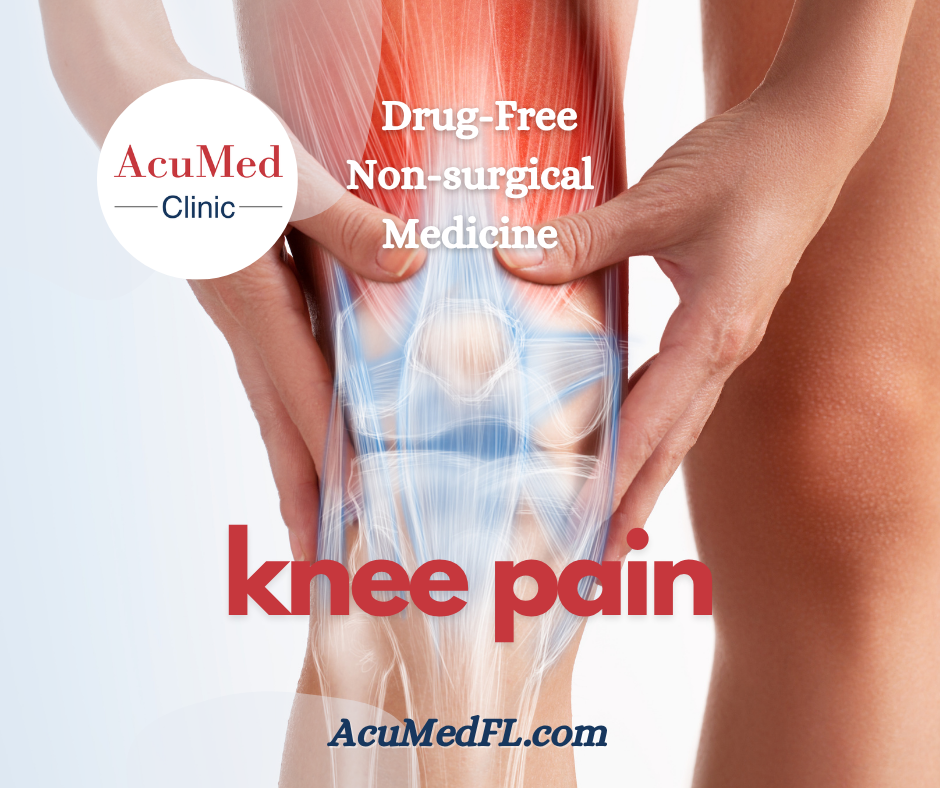
Other Areas We Treat