Tui Na is not just 'Chinese massage.' It is a complete system of clinical soft tissue therapy that may include compression, joint mobilization, cupping, gua sha, hot bamboo, and more — used at AcuMed Clinic as part of an integrative care plan for pain, stiffness, and restricted movement.
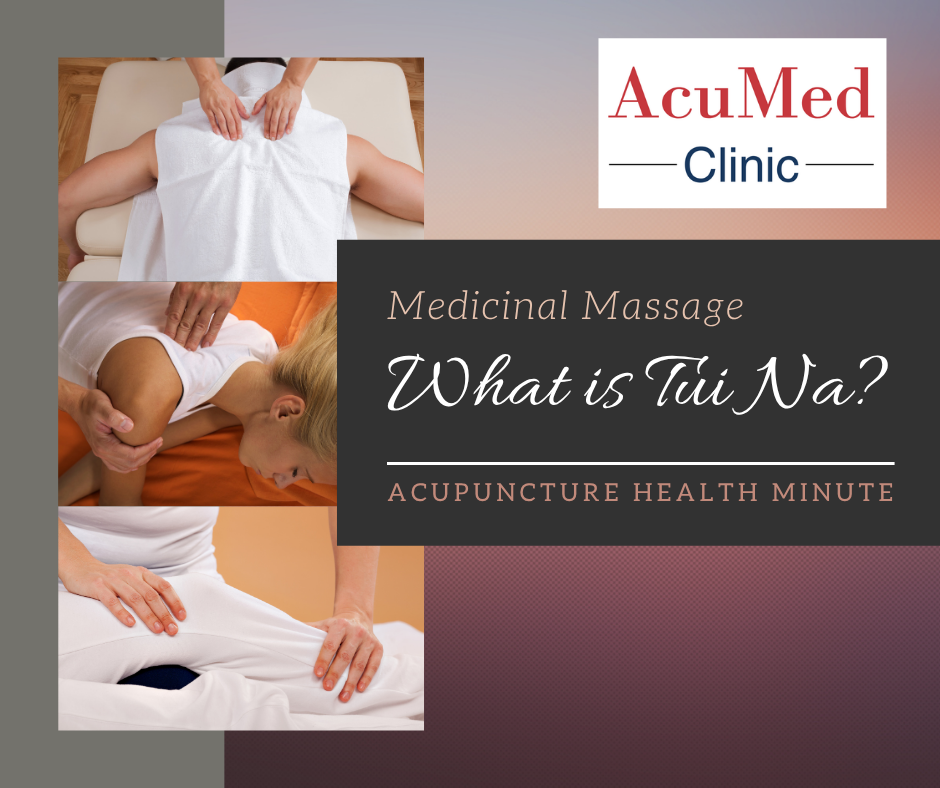
Tui Na is one of the major hands-on treatment methods used in traditional Chinese medicine. At AcuMed Clinic in Sarasota, we use Tui Na as a form of clinical soft tissue therapy for pain, stiffness, restricted movement, muscle tension, and recovery.
But Tui Na is not just "Chinese massage."
That description is too small.
Tui Na is better understood as a complete system of therapeutic bodywork that may include over-the-clothing massage techniques, compression, kneading, rolling, assisted stretching, and joint mobilization — without requiring oils or full skin exposure.
Other related soft tissue modalities may be performed directly on the skin when appropriate. These may include fire cupping, gua sha, hot stones, and hot bamboo. When skin-based techniques are used, AcuMed may apply natural oils such as argan oil or coconut oil to reduce friction, protect the skin, and allow smoother tissue work.
The purpose is not relaxation alone.
The purpose is to change how the body is functioning.
At AcuMed, Tui Na may be used to reduce muscular guarding, improve circulation, release soft tissue restriction, support recovery, calm pain sensitivity, and restore more comfortable movement.
Tui Na Is Clinical, Not Spa Massage
Many people hear the word massage and assume the goal is relaxation.
Relaxation can happen, but that is not the main point of Tui Na.
Tui Na is more specific and treatment-focused. It is used when there is a clinical reason to address muscle tension, joint stiffness, fascial restriction, trigger points, pain referral, or movement limitation.
A patient with neck pain needs a different strategy than a patient with low back stiffness. A patient with shoulder restriction needs different work than a patient with plantar fasciitis. A patient with chronic stress tension needs a different touch than someone recovering from an athletic injury.
At AcuMed, the treatment follows the patient's presentation. We do not use the same routine on everyone.
What Techniques Are Included in Tui Na?
Tui Na may include several hands-on and instrument-assisted approaches. Depending on the clinical goal, treatment may include:
- Over-the-clothing massage techniques
- Rolling, kneading, pressing, and compression
- Trigger point-style pressure
- Assisted stretching
- Gentle joint mobilization
- Fire cupping
- Gua sha
- Hot bamboo
- Hot stones
- Soft tissue scraping or friction techniques
- Circulation-focused bodywork
- Myofascial and connective tissue release
This makes Tui Na highly adaptable. It can be gentle and calming when the nervous system is overactive. It can be more focused and corrective when the problem is muscular restriction, trigger points, or chronic soft tissue stiffness.
The skill is knowing which tool belongs in the session — and which one does not.
Gua Sha: The Traditional Precursor to IASTM
Gua sha deserves special explanation because many patients have already experienced something similar in physical therapy, sports medicine, or athletic training.
In modern rehab settings, patients may be familiar with Graston Technique or other forms of instrument-assisted soft tissue mobilization, often called IASTM.
Gua sha can be understood as the traditional precursor to IASTM.
Both approaches use a tool to apply controlled pressure across soft tissue. The goal is to influence restricted fascia, muscle tension, circulation, and tissue mobility.
The difference is that traditional gua sha often uses natural tools — animal horn, jade, quartz, or other minerals and stones — and is generally applied with a lighter, more nuanced approach than aggressive scraping techniques. At AcuMed, gua sha is not used to bruise patients for effect. It is used clinically and appropriately, based on tissue tolerance and the treatment goal.
For patients who have had Graston from a physical therapist or athletic trainer, gua sha may feel familiar — but usually less mechanical, less aggressive, and more integrated into a broader treatment session.
Fire Cupping in Tui Na Treatment
Fire cupping is another traditional modality that may be included in Tui Na-based care.
Cupping uses suction to lift and decompress soft tissue. Rather than pressing down into tight muscles, cupping creates a lifting effect that may help improve local circulation, reduce muscle tension, and create more space in restricted tissue.
At AcuMed, cupping may be used for:
- Back tension
- Neck and shoulder stiffness
- Chronic muscle tightness
- Athletic overuse
- Myofascial restriction
- Recovery support
Cupping can leave temporary circular marks on the skin. These are not bruises in the usual trauma sense, but they can look dramatic. They typically fade over several days.
Cupping is not appropriate for every patient, especially those with certain skin conditions, bleeding disorders, blood thinner use, fragile skin, or active infection.
Hot Bamboo and Hot Stones
Heat can be clinically useful when muscles are guarded, circulation is reduced, or the nervous system is overactive.
Hot bamboo and hot stones may be used within Tui Na sessions to warm tissue, reduce guarding, support relaxation, and prepare restricted areas for more focused soft tissue work.
These tools are not gimmicks. Used correctly, heat can make manual therapy more effective by helping tissue become more receptive. Used incorrectly, it is just spa decoration.
At AcuMed, the modality must serve the clinical goal.
What Tui Na May Help With
Tui Na may be appropriate for patients dealing with:
- Neck pain and stiffness
- Low back pain
- Upper back tension
- Shoulder restriction
- Hip tightness
- Sciatica-like muscle tension
- Tension Headaches related to neck and shoulder tension
- TMJ-related muscle tightness
- Plantar fascia tension
- Sports injuries
- Repetitive strain
- Postural tension
- Muscle guarding after pain flare-ups
- Chronic soft tissue restriction
- Stress-related body tension
Tui Na does not cure every condition. It does not replace medical evaluation when symptoms suggest something serious.
But when pain involves muscle tension, fascia, circulation, joint restriction, or nervous system guarding, Tui Na can be a useful part of an integrative care plan.
How Tui Na Fits Into Care at AcuMed
AcuMed does not use Tui Na as a stand-alone wellness routine.
We use it as part of a larger clinical strategy.
Depending on your condition, Tui Na may be combined with:
- Medical acupuncture
- Cupping
- Gua sha
- Medical massage
- Myofascial release
- Laser ultrasound therapy
- BEMER therapy
- Neuro-electric medicine
- Trigger point therapy
- Recovery planning
Pain often has multiple drivers. A tight muscle may be tight because of stress. Or joint irritation. Or nerve sensitivity. Or compensation from an old injury. Or poor circulation. Or inflammation. Or restricted fascia.
The treatment plan should match the physiology.
That is why Tui Na at AcuMed is individualized.
What to Expect During a Tui Na Session
Tui Na is often performed over clothing, which makes it different from many forms of Western massage.
Your session may include focused pressure, compression, rolling, kneading, stretching, cupping, gua sha, hot bamboo, hot stones, or other soft tissue techniques depending on your needs.
Some sessions are calming and restorative. Others are more focused and therapeutic.
The pressure should feel productive, not punishing. More force is not always better. The goal is to improve function, not overwhelm the tissue.
After treatment, some patients feel looser, warmer, more relaxed, or more mobile. Mild soreness can occur, especially after focused soft tissue work, gua sha, or cupping.
When Tui Na May Not Be Appropriate
Tui Na may not be appropriate for every patient. Tell your provider if you have:
- Blood clots or suspected blood clots
- Active infection
- Fever
- Open wounds
- Fragile skin
- Severe osteoporosis
- Recent fracture
- Unexplained swelling
- Bleeding disorders
- Blood thinner use
- Pregnancy
- Active cancer treatment
- Severe nerve symptoms
- New weakness
- Recent surgery
- Severe or worsening pain
If your symptoms require imaging, urgent medical care, or specialist evaluation, Tui Na is not the first step.
A responsible clinic knows when to treat and when to refer.
Is Tui Na Right for You?
Tui Na may be a good fit if you are dealing with pain, stiffness, muscle tension, restricted movement, stress-related body tension, or soft tissue problems that have not fully improved with rest, stretching, medication, or standard massage.
At AcuMed Clinic in Sarasota, Tui Na is used as clinical soft tissue therapy — not generic bodywork.
The goal is to help you move better, recover better, and function better.
For Sarasota patients, Tui Na can be especially useful when pain or stiffness interferes with daily life — walking the Bayfront, playing pickleball, golfing, gardening, boating, exercising, or simply staying active and independent. The goal is not just temporary relief. The goal is helping your body move comfortably enough to keep participating in the life you enjoy.
Call AcuMed Clinic to schedule a consultation and find out whether Tui Na belongs in your care plan.
Frequently Asked Questions
Is Tui Na the same as massage?
Not exactly. Tui Na is a traditional Chinese medicine form of therapeutic bodywork. It uses techniques such as pressing, rolling, kneading, compression, stretching, and mobilization. It is more clinical and movement-focused than a typical relaxation massage.
Is Tui Na done over clothing?
Yes. Tui Na massage is typically performed over the clothing. This allows focused pressure, compression, stretching, and movement-based techniques without oil or direct skin contact.
Are cupping, gua sha, hot stones, and hot bamboo done over clothing?
No. These techniques are usually performed directly on the skin when clinically appropriate. AcuMed may use natural oils such as argan oil or coconut oil to reduce friction and protect the skin.
Is gua sha like Graston?
Gua sha can be understood as a traditional precursor to instrument-assisted soft tissue mobilization, or IASTM. Patients who have experienced Graston from a physical therapist or athletic trainer may recognize the concept. Gua sha typically uses natural tools and may be applied with a lighter, more nuanced approach.
Does Tui Na hurt?
It should not be unbearable. Some areas may feel tender, especially if there are trigger points, chronic tightness, or restricted tissue. The pressure should feel productive, not punishing.
What conditions may Tui Na help with?
Tui Na may support care for neck pain, back pain, shoulder tension, headaches related to muscle tightness, hip stiffness, plantar fascia tension, sports injuries, postural strain, and stress-related body tension.
Will I be sore after Tui Na?
Mild soreness can happen after focused soft tissue work, especially if chronic tension or restricted areas were treated. Severe pain is not the goal and should be reported.
Is Tui Na right for active Sarasota patients?
It may be. Many Sarasota patients use Tui Na-style care to support mobility, recovery, and comfort for walking, golfing, pickleball, gardening, boating, and staying active.