Peripheral neuropathy is one of the most common and undertreated nerve conditions affecting older adults in Sarasota and Manatee County. Learn what causes it, what symptoms actually mean, and what drug-free approaches can do — without surgery or waiting.
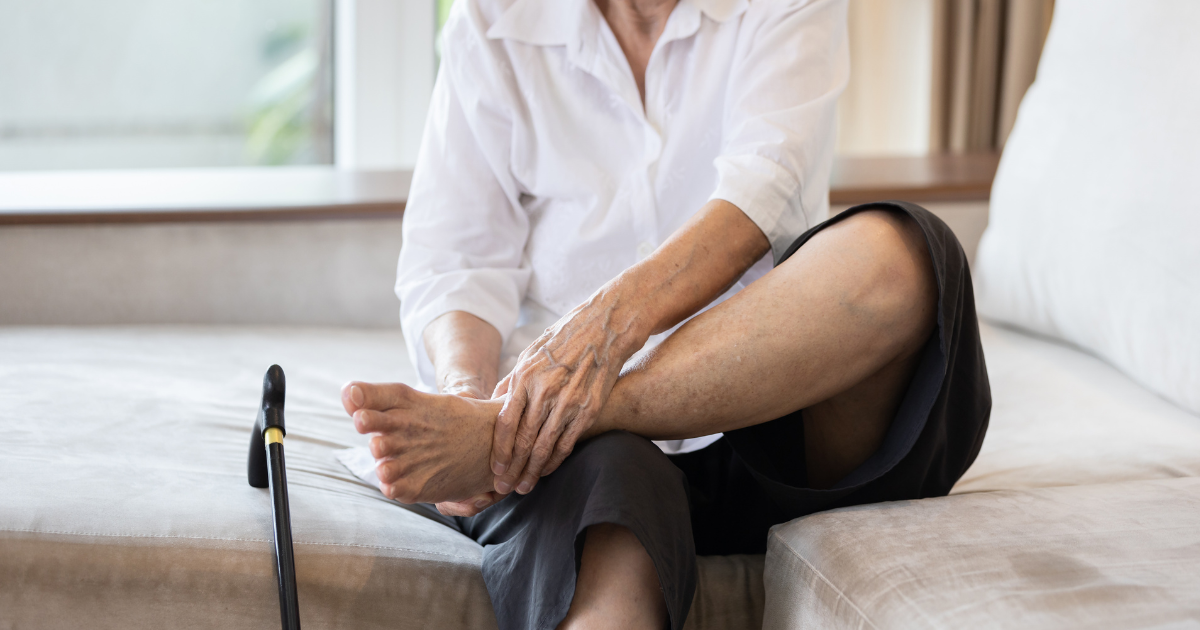
Talking to my fellow Sarasota and Manatee County residents: if you've ever noticed a faint tingling in your toes at the end of a walk along the bayfront, or a strange numbness in your feet that made you think twice before stepping onto uneven pavement at your favorite outdoor market — you may have already been living with the early signs of neuropathy without knowing what to call it.
It often starts so gradually you barely notice it. A little tingling at the end of the day. A slightly odd sensation when you walk barefoot on the lanai. Then one day you realize your feet feel like they belong to someone else — numb in some spots, burning or stabbing in others, unpredictably painful when you're not expecting it and strangely absent of sensation when you need it most.
Neuropathy — specifically peripheral neuropathy, damage or dysfunction in the nerves outside the brain and spinal cord — affects millions of adults and is particularly common in people over sixty and in those managing diabetes. In Sarasota County, where approximately 37 percent of the population is sixty-five or older, that means this condition is more prevalent here than in most parts of the country. Despite how common it is, it remains one of the most poorly understood and inadequately treated conditions in conventional medicine. Patients are often told that what they're experiencing is a normal consequence of aging or diabetes, that medication can take the edge off, and that there isn't much else to be done. In my clinical experience, that framing leaves a lot of people living with symptoms that are more manageable than they've been led to believe.
What Neuropathy Actually Is
Neuropathy is not a single disease. It's a term that describes nerve damage or dysfunction, and the word "peripheral" specifies that we're talking about the network of nerves that extends from the spinal cord out to the rest of your body — your legs, feet, arms, hands, and the systems that regulate digestion, heart rate, and other automatic functions.
Those peripheral nerves are responsible for carrying two types of signals: sensory signals (what you feel — temperature, pressure, pain, vibration, texture) and motor signals (instructions to your muscles to move). When those nerves are damaged or dysfunctional, the signals get scrambled. Some signals get amplified into burning pain or electric shocks when there's no physical reason for them. Other signals get blocked entirely, producing numbness — which is why someone with severe neuropathy can have a wound on their foot and not feel it.
Why Neuropathy Starts in the Feet and Hands
If you've noticed that neuropathy symptoms almost always begin in the feet first — and sometimes the hands — there's a straightforward reason for that. The nerves most affected by neuropathy tend to be the longest ones in the body, those that travel all the way from the spinal cord down to the feet. The length itself is the vulnerability: more nerve fiber means more surface area for damage, more distance the nerve's supply chain has to cover, and less resilience when that supply chain is compromised.
This is why doctors sometimes describe peripheral neuropathy as following a "stocking-and-glove" pattern — symptoms appear first in the feet (like socks) and, if the condition progresses, in the hands (like gloves). The longest nerves fail first. As the condition advances, symptoms can move further up the legs.
The burning, tingling, and electric sensations that many people describe aren't random — they're the result of damaged nerve fibers firing erratically, essentially misfiring pain and temperature signals. The numbness, paradoxically, can be just as dangerous, because loss of sensation removes the protective warnings that tell you when you've stepped on something sharp, when a shoe is rubbing a blister, or when the floor is unstable under your feet.
For those of us in Sarasota and Manatee County who enjoy walking on the beach, navigating the uneven brick sidewalks of downtown, or simply moving confidently through daily life — the real-world impact of disrupted foot sensation is not abstract. Neuropathy changes how safe you feel on your feet, and that affects everything from morning routines to whether you feel confident saying yes to an activity with friends or family.
Why Medication Alone Often Falls Short
The conventional pharmaceutical approach to neuropathy typically involves one of a few drug classes: anticonvulsants (originally designed for seizures, repurposed for nerve pain — often labeled as gabapentin or pregabalin), antidepressants (which at certain doses modulate pain signals in the nervous system), and topical agents like lidocaine patches or capsaicin cream. Some patients find meaningful relief with these, and they have a legitimate role.
But there are real limitations. These medications address how the brain perceives pain signals — they don't repair nerve tissue, restore circulation to nerves, or address the underlying mechanisms that continue to cause damage. They come with side effect profiles that many patients find difficult to tolerate, particularly dizziness, cognitive fog, and fatigue — effects that are especially concerning for older adults already at increased risk of falls. And for many patients, they provide incomplete relief at best.
What's often missing is any approach that targets the nerve environment directly — improving blood flow to peripheral nerves, reducing neuroinflammation, or stimulating the body's own nerve repair processes. Drug-free approaches that work through these mechanisms can complement medical management or, for some patients, provide a meaningful alternative path.
Diabetic Neuropathy Treatment and Other Drug-Free Care at AcuMed
At AcuMed Clinic, Dr. Kitt — an Acupuncture Physician serving Sarasota and Manatee County — focuses on drug-free, non-surgical approaches to chronic pain and nerve-related conditions, helping patients improve function, comfort, and quality of life without relying exclusively on medication. Sarasota acupuncture is one of the core tools we use for neuropathy care.
Neuropathy is one of the conditions we see most consistently at AcuMed Clinic, and it's one where integrative care has a genuinely useful role — not as a replacement for medical management, but as a way to address what medications alone don't reach.
Acupuncture, laser therapy, and bio-electric medicine each work through different pathways that are relevant to neuropathy: improving microcirculation to nerve tissue, modulating inflammatory processes in and around peripheral nerves, and engaging the nervous system in ways that can reduce the erratic signaling that produces burning and electric pain. Many patients managing neuropathy alongside diabetes or a history of chemotherapy find that a combination approach produces improvements in sensation, pain levels, and quality of life that they hadn't achieved through medication alone.
We accept BCBS and UHC, and will be one of the few Medicare-credentialed acupuncture providers in Southwest Florida. Veterans with neuropathy are also welcome — we accept VA Community Care. If you're unsure about your coverage, we're happy to talk through your options before your first appointment.
For more on the treatment side of neuropathy, see our upcoming post: Acupuncture for Neuropathy.
Frequently Asked Questions
What are the most common causes of neuropathy in Sarasota adults?
In the patients I see most often in this area, the leading causes are:
- Diabetes — consistently high blood sugar damages the walls of the small blood vessels that feed the nerves, starving them of oxygen and nutrients over time. Diabetic neuropathy is the most common form in the United States.
- Chemotherapy-induced neuropathy — many cancer drugs are toxic to peripheral nerves as a side effect of targeting rapidly dividing cells. Patients with a history of cancer treatment frequently carry this with them for years afterward.
- Aging and idiopathic neuropathy — a significant percentage of neuropathy cases, particularly in older adults, have no clearly identified cause. The nerves simply become less efficient over time.
- Vitamin B12 deficiency — common in older adults, especially those who have taken metformin long-term or who follow a plant-heavy diet without supplementation.
- Other contributing factors — chronic alcohol use, hypothyroidism, and autoimmune conditions can each damage or inflame peripheral nerves and are worth ruling out if no primary cause has been identified.
Can Florida weather affect neuropathy symptoms?
This is a question I hear often, and the honest answer is: yes, it can — and there are two useful frameworks for understanding why.
From a modern clinical perspective, barometric pressure changes, high humidity, and rapid weather shifts (including the tropical storms and seasonal transitions that are part of life in Southwest Florida) are associated with changes in how the nervous system processes pain. While the research is not yet definitive, many patients notice their neuropathy symptoms fluctuate with weather patterns, and that observation is clinically credible.
Acupuncture and Herbal Medicine has described environmental dampness, heat, and wind as contributing to nerve pain, numbness, and functional impairment for centuries. The framework is different from Western biomedicine, but both traditions are observing a similar phenomenon — that the body's experience of pain and sensation does not exist in isolation from its environment. When a patient living on Florida's Gulf Coast tells me their feet feel worse in summer or ahead of a storm front, I take that seriously within both frameworks.
Is neuropathy reversible, or is the nerve damage permanent?
It depends on the cause, how long the damage has been present, and how much of the nerve fiber has been lost versus impaired. In early-stage neuropathy, or in cases where the underlying cause can be addressed (blood sugar control, B12 supplementation, eliminating a toxic exposure), meaningful improvement is possible. In advanced cases with significant nerve fiber loss, the goal shifts toward slowing progression, reducing pain, and improving function. The honest answer is that the earlier you address it, the more options you have.
I have diabetes. Am I definitely going to develop neuropathy?
Not necessarily. Neuropathy is common in people with long-standing or poorly controlled diabetes, but it is not inevitable. Good blood sugar management significantly reduces the risk and can slow progression if early symptoms are present. If you're already noticing tingling or numbness in your feet, that's worth addressing sooner rather than later.
Can neuropathy affect my balance and my risk of falling?
Yes, and this is one of the most clinically significant aspects of neuropathy that doesn't get enough attention. The nerves in your feet contribute substantially to your proprioception — your body's sense of where it is in space. When those signals are disrupted, balance becomes less stable, and fall risk increases meaningfully. For active adults in Sarasota and Manatee County who walk on uneven ground, sandy or wet surfaces, or crowded public spaces, this is not a minor concern. Improving foot sensation and nerve function is not just about comfort — it's a safety issue with real consequences for independence.
My feet are numb but not painful. Does that mean my neuropathy isn't serious?
Numbness without pain is not necessarily a milder form of neuropathy. In some cases, it reflects more advanced nerve damage — the nerve has lost enough function that it is no longer producing pain signals. Numbness that prevents you from feeling wounds, pressure, or temperature changes is dangerous in ways that burning pain is not. Both presentations deserve attention.
I've been told to "just watch it." Is that appropriate?
Watching is appropriate when there's genuine uncertainty about the cause and more workup is needed. It is less appropriate as a long-term management strategy once the diagnosis is clear. Peripheral nerves do not regenerate quickly, and waiting often means allowing the underlying process to continue unopposed. If you've been watching for more than a few months without a clear plan, it's worth getting a second opinion.
Does Medicare cover acupuncture for neuropathy?
Medicare currently covers acupuncture only for qualifying chronic low back pain, not for neuropathy. Coverage rules can change, so patients should verify benefits before treatment. However, AcuMed Clinic does offer treatments other than acupuncture that are covered by Medicare such as Ultrasound Therapy, Neuromuscular Therapy, Manual Therapy, and Trigger Point Injection Therapy.
Why Sarasota and Manatee County Seniors Are More Vulnerable to Neuropathy Than They May Realize
Sarasota and Manatee Counties have among the highest concentrations of adults sixty-five and older in the state of Florida — and across the country. That demographic concentration creates a meaningful local context for neuropathy that most general health information doesn't account for.
Older adults are disproportionately affected by neuropathy for reasons that compound each other: longer duration of conditions like diabetes (which increases cumulative nerve exposure), greater likelihood of B12 deficiency (from long-term medication use or dietary changes that often accompany aging), higher rates of prior chemotherapy in survivorship, and natural age-related changes in nerve conduction. The result is that neuropathy is not a rare condition in this community — it is commonplace, and commonly under addressed.
The active retirement lifestyle that draws people to this part of Florida — walking, boating, swimming, cycling, attending events, engaging with grandchildren — depends on foot and leg function in ways that become clearer only when that function is compromised. Many patients I see waited years before seeking care, accepting a gradual decline in confidence on their feet as simply part of getting older. It isn't. Neuropathy is a condition, and conditions deserve assessment and a plan.
The earlier neuropathy is evaluated, the more options exist. That is as true in Sarasota as anywhere — and given how many people here are living with the specific risk factors most associated with this condition, it's worth knowing your baseline before symptoms progress.
Ready to Talk About What's Possible?
If neuropathy in your feet or hands has been affecting your comfort, your sleep, or your confidence walking — whether you're in Sarasota or Manatee County — we'd like to help you think through your options. AcuMed Clinic offers drug-free, non-surgical approaches to neuropathy care in Sarasota alongside coordination with your existing medical team.
For a deeper look at causes, symptoms, and what drug-free treatment can realistically offer, read our full guide to neuropathy in the feet. To take the next step, book your appointment at AcuMed Clinic — we're here to help you think through what's possible.
Ready to Find Drug-Free Neuropathy Care in Sarasota?
AcuMed Clinic opens soon in Sarasota. Dr. Kitt sees patients with peripheral neuropathy, diabetic neuropathy, and chemotherapy-induced neuropathy and works alongside your existing medical team.
(941) 250-6911
We accept BCBS, UHC, VA Community Care, and are enrolling with Medicare. Community acupuncture — a 30-minute shared-room appointment with full intake and treatment included — is also available.