Individual Food Guide
Garlic (Da Suan)
Allium sativum
Evidence-Based Nutrition Through an Acupuncture and Herbal Medicine Lens
Individual Food Guide
Allium sativum
Evidence-Based Nutrition Through an Acupuncture and Herbal Medicine Lens
Garlic is one of the oldest medicinal foods known to humanity. For more than 5,000 years it has been valued not only for its bold flavor, but also for its ability to support health. Ancient Egyptian laborers ate garlic to improve endurance. Greek physicians prescribed it for a variety of ailments. Throughout Asia, Europe, and the Middle East, garlic became both a staple food and an important medicinal herb.
Today, garlic continues to bridge traditional wisdom and modern science. Researchers have identified dozens of sulfur-containing compounds — including allicin — that help explain many of garlic's biological effects. Studies have investigated garlic's role in cardiovascular health, immune function, inflammation, metabolism, and healthy aging. While not every traditional claim has been confirmed, garlic remains one of the best-studied medicinal foods in the world.
At AcuMed Clinic, garlic represents our philosophy of “Food First. Herbs Second.” Before considering herbal formulas or dietary supplements, we often look at foods that patients can realistically incorporate into everyday life. Garlic is affordable, available year-round, and easy to include in meals — making it one of the simplest therapeutic foods to add to a healthy diet.
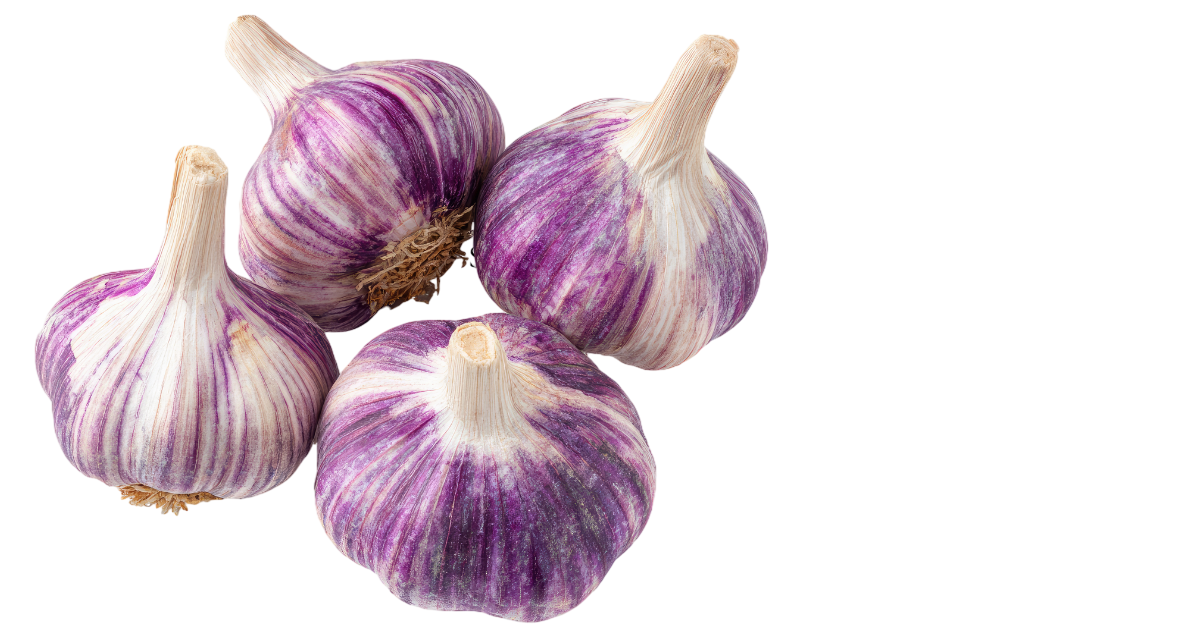
Garlic (Allium sativum) belongs to the onion family (Allium), which also includes onions, shallots, leeks, scallions, and chives. The edible portion is the bulb, which contains multiple cloves wrapped in papery skin.
Although garlic is commonly viewed as a seasoning, Acupuncture and Herbal Medicine (AHM) has long considered it a medicinal food. Traditional dietary texts classify garlic as a warming food that promotes the movement of Qi, warms the Middle Burner, helps transform Dampness, and supports healthy circulation.
Unlike many medicinal herbs that require careful preparation, garlic naturally fits into everyday cooking. Each preparation method changes its flavor, aroma, and, to some degree, its chemistry. Fresh raw garlic contains the highest levels of allicin — a sulfur compound produced when garlic is chopped, crushed, or chewed. Because allicin is unstable and breaks down quickly with heat, raw garlic has a stronger flavor and aroma than cooked garlic.
Traditional dietary therapy describes garlic as a warming food that stimulates movement and disperses stagnation. Unlike cooling vegetables that nourish Yin or clear Heat, garlic is primarily used when Cold, Dampness, or stagnation interfere with normal body function.
Supports Spleen and Stomach function; relieves Cold in digestion.
Encourages smooth Qi circulation; relieves stagnation and bloating.
Warming nature helps counter excess internal Dampness.
Supports digestive comfort after heavy, protein-rich meals.
Transforms Cold-related mucus and supports respiratory function.
Historical use for intestinal support in traditional practice.
Supports smooth movement of Qi and Blood throughout the body.
Prebiotic fibers nourish beneficial gut bacteria.
One of garlic's primary traditional actions is warming the digestive system. In AHM, digestion depends on adequate warmth to transform food into Qi and Blood. Excessive consumption of cold foods, iced beverages, chronic illness, aging, or constitutional weakness may impair digestive function.
Garlic provides gentle warmth that may help restore digestive function. This is one reason garlic appears in traditional soups, broths, and cooked meals throughout many cultures.
People with this pattern often report:
Qi should flow smoothly throughout the body. Stress, inactivity, poor diet, and chronic illness may contribute to stagnation. Traditional practitioners view garlic as a food that encourages healthy movement rather than stagnation. While it is not among the strongest Qi-moving herbs, regular culinary use has long been recommended when sluggish digestion is present.
Qi stagnation may manifest as:
Dampness is one of the most common patterns encountered in Acupuncture and Herbal Medicine. Garlic's warming nature helps counter excessive internal Dampness. For this reason it pairs well with many foods recommended on our Dampness-Resolving Foods page.
Patients with Dampness may experience:
Traditional medicine recognized that heavy meals — especially those rich in meat and fat — could temporarily overwhelm digestion. Garlic has traditionally been used alongside protein-rich meals to help support digestive comfort and promote the normal movement of food through the digestive tract. Its long history as a culinary seasoning may be one reason garlic became associated with digestive health long before modern physiology explained digestive enzymes and gastrointestinal motility.
Garlic has also been used traditionally for respiratory conditions associated with Cold. Its warming qualities were believed to help restore normal Lung function while transforming Cold-related mucus.
Traditional texts often describe garlic as promoting circulation. Rather than describing arteries and veins as modern medicine does, AHM focuses on the smooth movement of Qi and Blood throughout the body. Modern research investigating garlic's effects on blood pressure, cholesterol, endothelial function, and cardiovascular health provides an interesting parallel to these traditional observations, although the concepts are not identical.
Garlic is one of the most extensively researched medicinal foods in the scientific literature. The best-known sulfur-containing compounds include:
The strongest evidence for garlic involves cardiovascular health. Numerous studies suggest garlic may modestly support healthy blood pressure, improve cholesterol profiles, and support healthy blood vessel function. Garlic should not replace prescribed medications, but regular dietary intake may contribute to an overall heart-healthy lifestyle.
Garlic has long been associated with supporting immune health. Laboratory studies demonstrate antimicrobial activity, while some human studies suggest garlic supplementation may reduce the frequency or severity of common colds. More research is needed to determine which forms and doses are most effective.
Oxidative stress contributes to many chronic diseases. Garlic contains numerous antioxidant compounds that help protect cells from oxidative damage. Researchers continue to investigate garlic's potential role in healthy aging and chronic disease prevention.
Garlic contains prebiotic fibers that nourish beneficial intestinal bacteria. A healthy gut microbiome contributes to digestion, immune regulation, and overall health. Garlic's long-standing reputation as a digestive food may therefore reflect both traditional observations and modern understanding of gut health.
Black garlic is produced by aging whole garlic bulbs under carefully controlled temperature and humidity over several weeks. This process does not involve mold or fermentation — instead, natural chemical reactions darken the cloves, producing a sweet, mild flavor while increasing certain antioxidant compounds, including S-allyl cysteine. Black garlic contains less allicin than fresh garlic but may have higher antioxidant activity. Research is promising, particularly for heart health and inflammation, though larger human studies are still needed.
Although garlic is typically consumed in small amounts, it is surprisingly rich in beneficial plant compounds. More importantly, it supplies sulfur-containing phytochemicals that have become the focus of extensive biomedical research.
Manganese
Bone formation, metabolism, antioxidant function
Vitamin B6
Brain health and normal metabolism
Vitamin C
Immune function and collagen synthesis
Selenium
Thyroid function and antioxidant defense
Potassium
Fluid balance, muscle function, nerve signaling
Dietary Fiber
Prebiotic support for gut microbiome
Allicin
Produced on cutting/crushing; antimicrobial, cardiovascular
Diallyl Sulfides
Anti-inflammatory; formed during cooking
Ajoene
Antithrombotic and antifungal activity
S-Allyl Cysteine
Stable antioxidant; elevated in black garlic
Quercetin
Flavonoid with antioxidant and anti-inflammatory properties
Garlic fits naturally into the active Sarasota lifestyle. Whether you're preparing fresh Gulf seafood after a day on Siesta Key, grilling vegetables after cycling the Legacy Trail, or making homemade soup on one of our cooler winter evenings, garlic adds both flavor and nutritional value.
Keeping a few bulbs of garlic in your kitchen makes it easy to incorporate one of nature's most versatile medicinal foods into everyday meals. Fresh garlic stores well on the counter for weeks and is available year-round at every local market.
Garlic works well in countless recipes. At AcuMed Clinic, we encourage patients to think of garlic not as a supplement to measure carefully, but as a flavorful ingredient that naturally becomes part of a healthy eating pattern.
Tip: For maximum allicin production, many culinary experts recommend chopping or crushing fresh garlic and allowing it to sit for several minutes before cooking — although the clinical significance of this practice in everyday diets remains uncertain.
Garlic is safe for most healthy adults when consumed as food. Medicinal amounts or supplements may not be appropriate for everyone.
From an AHM perspective, garlic is generally used cautiously in individuals with:
Pronounced Heat Patterns
Fever, sore throat, yellow mucus — garlic's warming nature may aggravate.
Significant Yin Deficiency
Night sweats, dry mouth, hot flashes — additional warming may worsen internal Heat.
Stomach Heat
Burning stomach pain, acid reflux — raw garlic may irritate.
Speak with your healthcare provider before using high-dose garlic supplements if you:
Take blood-thinning medications
Have a bleeding disorder
Are preparing for surgery
Have significant acid reflux or GERD
Have a garlic allergy
Raw garlic may also cause heartburn, stomach irritation, or digestive discomfort in some individuals.
Garlic is one of my favorite examples of food functioning as medicine. It isn't exotic, expensive, or difficult to find. Nearly everyone already has it in their kitchen.
The goal isn't to eat as much garlic as possible. The goal is to use it appropriately. Someone struggling with Cold digestion, Dampness, or sluggish circulation may benefit from incorporating garlic into their meals regularly. Someone with significant internal Heat may be better served by emphasizing cooling foods instead.
Food Therapy is never about finding one “superfood.” It's about matching the right foods to the right person at the right time.
Raw garlic contains more allicin because heat rapidly breaks down this compound. However, both raw and cooked garlic can be part of a healthy diet, and cooking does not eliminate all of garlic's beneficial compounds.
There is no universal recommendation. For most people, incorporating garlic regularly into cooking is a practical approach without relying on large medicinal doses.
Black garlic is fresh garlic that has been aged under controlled heat and humidity. It has a sweet, mellow flavor and higher levels of certain antioxidant compounds — particularly S-allyl cysteine — than fresh garlic.
Research suggests garlic may modestly support healthy blood pressure, but it should not replace prescribed medications.
Some studies suggest garlic may help support immune function and reduce the frequency of common colds, although additional research is needed.
No. While culinary amounts are safe for most people, medicinal doses may not be appropriate for individuals taking blood thinners, those with certain digestive conditions, or people with specific AHM patterns such as pronounced Heat or significant Yin Deficiency.
Cold, Yang Deficiency, and weak digestion patterns
Fluid retention, bloating, and Spleen Qi Deficiency
Fatigue, low stamina, and Qi Deficiency patterns
Blood Deficiency, fatigue, dry skin, and circulation
Yang Deficiency, low energy, and hormone support
A companion warming herb used alongside garlic in many traditional preparations
Medical Disclaimer: This article is intended for educational purposes only and should not be used as a substitute for professional medical advice, diagnosis, or treatment. Food Therapy recommendations should be individualized based on your health history, medications, and Acupuncture and Herbal Medicine pattern. If you have questions about whether garlic is appropriate for you, schedule a consultation with your healthcare provider or an Acupuncture Physician at AcuMed Clinic.