Individual Food Guide
Fresh Ginger (Sheng Jiang)
Zingiber officinale
Evidence-Based Nutrition Through an AHM Lens
Individual Food Guide
Zingiber officinale
Evidence-Based Nutrition Through an AHM Lens
Fresh ginger is one of the oldest and most widely used medicinal foods in the world. Long before modern pharmaceuticals, people across Asia, the Middle East, Africa, and Europe used ginger to support digestion, relieve nausea, warm the body, and promote overall health. Today, it remains one of the few medicinal plants that is equally at home in the kitchen and the clinic.
At AcuMed Clinic, fresh ginger exemplifies our philosophy of “Food First. Herbs Second.” Whenever appropriate, we prefer to begin with practical dietary changes before recommending herbal formulas. Fresh ginger is inexpensive, readily available, easy to prepare, and supported by both centuries of traditional use and a growing body of modern scientific research.
From an Acupuncture and Herbal Medicine (AHM) perspective, fresh ginger is known as Sheng Jiang (生姜). It is valued for its ability to gently warm the body, support healthy digestion, harmonize the Stomach, release the Exterior during the early stages of a Wind-Cold illness, warm the Lungs, and promote the smooth movement of Qi. Unlike many herbs that are reserved for specific prescriptions, fresh ginger can often be incorporated into everyday meals, teas, soups, and broths.
Modern medicine has also taken a strong interest in ginger. Research has investigated its potential role in reducing nausea associated with pregnancy, motion sickness, surgery, and chemotherapy, as well as its effects on osteoarthritis, digestion, inflammation, and metabolic health. Whether you're recovering from an illness, managing chronic pain, trying to improve digestion, or simply looking to eat a healthier diet, fresh ginger may become an important part of your personalized Food Therapy plan.
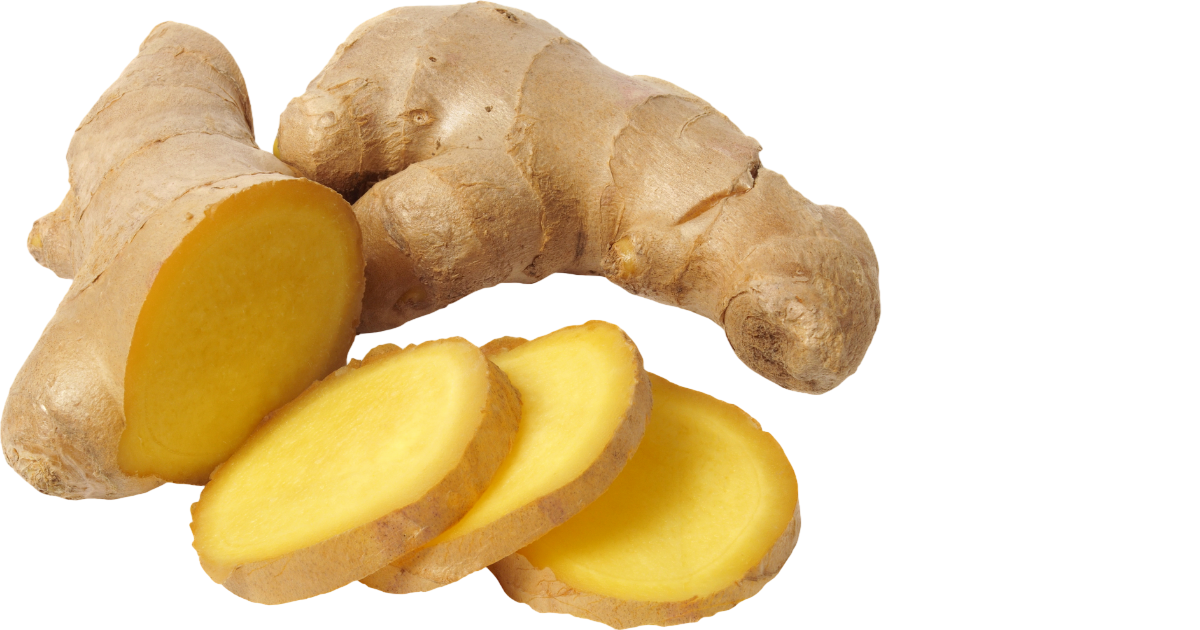
Fresh ginger is the underground stem, or rhizome, of the plant Zingiber officinale. Although many people refer to it as a root, it is technically a rhizome — a specialized stem that grows beneath the soil. Its tan skin and bright yellow interior have become familiar ingredients in kitchens throughout the world, where it adds warmth and flavor to everything from soups and stir-fries to teas and baked goods.
Fresh ginger has been recorded in Chinese medical texts for more than 2,000 years and remains one of the most frequently used herbs in traditional practice. One of the reasons it is so highly valued is that it bridges the gap between food and medicine — unlike many medicinal herbs that are unfamiliar to most Americans, ginger is already a common ingredient found in grocery stores, farmers markets, and home kitchens.
It is important to understand that fresh ginger and dried ginger are not interchangeable in Acupuncture and Herbal Medicine. Although both originate from the same plant, they are considered different medicinal substances and are selected based on an individual's pattern.
Gentler warming action. Used for surface-level and digestive patterns.
Stronger, concentrated warming action. Used for deeper Cold patterns.
Traditional texts describe fresh ginger as having six primary functions. Rather than targeting a single disease, Sheng Jiang helps restore balance when specific patterns of disharmony are present.
Disperses Wind-Cold during the earliest stage of illness.
Gently promotes a mild sweat to expel external pathogens.
Supports Spleen and Stomach function; relieves Cold in digestion.
Redirects rebellious Stomach Qi downward; relieves nausea.
Transforms Cold Phlegm and supports respiratory function.
Balances protective and nutritive Qi; moderates herbal formulas.
One of the most common traditional uses of fresh ginger is to release the Exterior. In AHM, the Exterior refers to the body's first line of defense against environmental influences such as wind, cold, dampness, dryness, or heat. During the earliest stages of a Wind-Cold illness, the body's defensive Qi is actively working to prevent the illness from moving deeper.
By gently warming the surface of the body and promoting a mild sweat, ginger is believed to help expel Wind-Cold before it progresses further. This is why ginger tea has been a traditional home remedy in many cultures for generations.
Patients in this stage often describe:
Closely related to releasing the Exterior is ginger's ability to gently induce perspiration. In AHM, a mild, controlled sweat may help the body release an external Wind-Cold pathogen during the earliest phase of illness. Unlike stronger diaphoretic herbs, fresh ginger promotes only a gentle sweat — the goal is to support the body's own defensive response while conserving energy.
This traditional action explains why many cultures recommend sipping warm ginger tea, resting under a blanket, and staying well hydrated when the first signs of a cold appear.
Important: This recommendation is pattern-specific. Ginger is not traditionally used to induce sweating in every illness and is generally avoided when Heat signs or spontaneous sweating from Exterior Deficiency are present.
Fresh ginger is perhaps best known for its ability to warm the Middle Burner — primarily the Stomach and Spleen, the organ systems responsible for receiving food, digesting it, extracting nourishment, and transforming it into Qi and Blood.
Cold, excessive consumption of raw foods, irregular eating habits, chronic illness, aging, or constitutional weakness may impair digestive function. From an AHM perspective, this pattern is often described as Cold in the Middle. Fresh ginger is traditionally used to gently warm digestive function without being overly drying or stimulating.
This is one reason ginger appears so frequently in soups, broths, porridges, and slow-cooked meals throughout Asia. Modern research has also investigated ginger's effects on gastric emptying, stomach motility, and digestive comfort.
People with Cold in the Middle may experience:
Perhaps the best-known use of fresh ginger in both traditional medicine and modern research is its ability to relieve nausea and vomiting. For centuries, Sheng Jiang has been one of the primary herbs used to “harmonize the Stomach” and redirect rebellious Stomach Qi downward.
In AHM, healthy Stomach Qi naturally moves downward as food is digested. When this movement is disrupted, Stomach Qi may move upward instead, resulting in nausea, belching, hiccups, acid reflux, or vomiting — a pattern known as Rebellious Stomach Qi. Fresh ginger is traditionally used to restore normal downward movement while gently warming the digestive system.
Today, modern research supports several of these traditional observations. Ginger has become one of the most extensively studied natural therapies for nausea and has shown benefit for pregnancy-related nausea, postoperative nausea, and motion sickness. Research also suggests ginger may help reduce chemotherapy-induced nausea when used alongside conventional anti-nausea medications, although it should never replace treatments recommended by an oncology team.
Patients experiencing Rebellious Stomach Qi may notice:
Fresh ginger is also traditionally used to warm the Lungs when Cold has interfered with normal respiratory function. In AHM, the Lungs are responsible for distributing defensive Qi while regulating breathing and the movement of body fluids. When Cold enters the Lungs, normal circulation of Qi may slow, leading to congestion and coughing.
Fresh ginger gently warms the Lung system and helps transform thin, watery mucus associated with Cold patterns. For this reason, ginger is frequently included in warm broths, teas, and soups prepared during the early stages of a common cold.
One of the more unique traditional functions of fresh ginger is its ability to reduce the toxicity of certain herbs and foods, particularly seafood. Historically, practitioners observed that combining fresh ginger with fish and shellfish appeared to reduce digestive discomfort and improve tolerance. Although these observations developed centuries before bacteria and food safety were understood, ginger became a standard ingredient in many seafood dishes throughout Asia.
Fresh ginger was also used in traditional herbal formulas to moderate the harsh properties of certain medicinal herbs — rather than changing the primary action of the prescription, ginger helped improve digestion, reduce stomach irritation, and harmonize the overall formula. Today, ginger continues to appear naturally alongside fish, shrimp, crab, and shellfish in cuisines around the world.
Among the traditional functions of Sheng Jiang, perhaps the most confusing is its ability to adjust the Ying and Wei. This phrase comes directly from classical Chinese medicine — but the underlying concept is easier to understand than the terminology suggests.
Wei Qi circulates near the surface of the body and helps protect against external influences such as Wind, Cold, Heat, and Dampness. It plays a role in regulating body temperature, opening and closing of the pores, sweating, and adaptation to environmental changes.
Often compared to aspects of immune function and the body's protective barriers — though the concepts are not identical.
Ying Qi circulates deeper within the vessels, nourishing the organs, muscles, tendons, and tissues. It is closely associated with Blood production and the body's ability to repair and maintain itself.
When Ying Qi is insufficient, recovery from illness or injury may be slower because the body lacks adequate nourishment.
Fresh ginger is traditionally believed to help restore communication between these two systems. Rather than dramatically increasing one or the other, Sheng Jiang gently encourages them to function in harmony. This harmonizing action helps explain why ginger appears in numerous classical herbal formulas — often included not because it is the primary treatment, but because it helps the other herbs work together more effectively while supporting normal digestive function.
Researchers have identified hundreds of naturally occurring compounds within ginger. Among the most extensively studied are gingerols, which are abundant in fresh ginger, and shogaols, which become more concentrated as ginger is dried or heated. These compounds are believed to contribute to ginger's antioxidant activity, anti-inflammatory actions, and influences on digestive function.
The strongest scientific evidence supporting ginger involves the treatment of nausea. Numerous clinical studies have found ginger may help reduce nausea associated with pregnancy, motion sickness, recovery after surgery, and certain chemotherapy treatments when used alongside standard anti-nausea medications. These findings closely parallel ginger's long history in AHM for directing rebellious Stomach Qi downward.
Morning sickness affects many women during the first trimester. Several systematic reviews suggest ginger may reduce nausea for many pregnant women without increasing the risk of major complications when consumed in appropriate amounts. However, pregnant women should always discuss herbal supplements with their obstetric provider before using medicinal doses. Culinary amounts in cooking are generally different from concentrated supplements.
Researchers have investigated ginger for chronic joint pain, particularly osteoarthritis of the knee and hip. Some studies suggest ginger may modestly reduce pain and stiffness, likely because of its anti-inflammatory properties. While ginger is not a replacement for exercise, physical therapy, weight management, or other medical treatments, it may serve as one component of a comprehensive pain management strategy.
Scientific studies have shown that ginger may stimulate gastric emptying and support normal stomach motility in some individuals. These findings provide an interesting modern parallel to the traditional AHM concept of warming the Middle Burner and restoring the proper downward movement of Stomach Qi.
Fresh ginger contains gingerols, shogaols, zingerone, and paradols — compounds that have demonstrated antioxidant and anti-inflammatory activity in laboratory and clinical studies. Researchers continue to investigate how these compounds may influence inflammatory pathways, oxidative stress, cardiovascular health, metabolic function, and healthy aging.
Fresh ginger is much more than a flavorful spice. Although most people consume it in relatively small amounts, it provides a variety of nutrients and unique plant compounds. One tablespoon of fresh grated ginger contains only a few calories, making it an easy addition to almost any meal.
Manganese
Bone formation, metabolism, antioxidant function
Potassium
Fluid balance, muscle contractions, nerve signaling
Magnesium
Muscle relaxation, energy production, enzymatic reactions
Vitamin B6
Brain health and normal metabolism
Copper
Connective tissue formation, red blood cell production
Dietary Fiber
Digestive health when consumed as whole food
More important than its vitamin and mineral content are ginger's naturally occurring phytochemicals — responsible for its characteristic aroma and spicy flavor while also being the focus of much of today's scientific research.
Gingerols
Abundant in fresh ginger; anti-inflammatory and antioxidant
Shogaols
Concentrated in dried/heated ginger; potent bioactive compounds
Zingerone
Formed during cooking; contributes to flavor and bioactivity
Paradols
Related compounds with antioxidant activity
Living in Sarasota means enjoying an active outdoor lifestyle nearly year-round. Whether you're walking the Legacy Trail, kayaking through the mangroves, playing eighteen holes of golf, gardening in the Florida sunshine, or hiking the trails at Myakka River State Park, maintaining healthy joints, good digestion, and steady energy becomes increasingly important.
A warm cup of ginger tea after an early morning paddle can be comforting on one of Sarasota's cooler winter mornings. Adding grated ginger to a stir-fry after a day on the golf course incorporates one of the most widely studied medicinal foods into your evening meal. Homemade soups featuring ginger are equally welcome during our rainy season when many people find themselves dealing with seasonal respiratory illnesses.
One advantage of living in Sarasota is the easy availability of fresh produce. Small dietary habits practiced consistently often have a greater impact than dramatic changes that are difficult to maintain.
Because ginger stores well in the refrigerator or freezer, many families keep a piece on hand for cooking whenever they need it.
Unlike many medicinal herbs that are taken only as capsules or teas, fresh ginger naturally fits into everyday cooking. At AcuMed Clinic, we encourage patients to think beyond recipes — consider ginger a flavorful ingredient that can become part of your regular eating pattern rather than a medicine that must be measured precisely.
Fresh ginger is considered safe for most healthy adults when consumed as a normal part of the diet. However, like any medicinal food or herbal therapy, it is not appropriate for everyone or every situation.
Fresh ginger is traditionally avoided or used cautiously in people with:
Lung Heat
Yellow mucus, sore throat, fever, or sensation of internal heat — cooling foods preferred.
Stomach Heat
Burning stomach pain, excessive thirst, foul breath, or Heat-pattern vomiting.
Yin Deficiency with Heat
Night sweats, dry mouth, hot flashes, or red tongue with little coating.
Exterior Deficiency with Spontaneous Sweating
Ginger promotes perspiration and is avoided when sweating results from a weakened defensive system.
Talk with your healthcare provider before taking medicinal amounts of ginger if you:
Take blood-thinning medications such as warfarin or other anticoagulants
Take medications that affect blood sugar
Have gallbladder disease
Are scheduled for surgery
Are pregnant and considering ginger supplements (rather than culinary use)
Have questions about possible medication interactions

If I had to choose one medicinal food that almost everyone recognizes, it would be fresh ginger. It is inexpensive, available in nearly every grocery store, and simple to incorporate into everyday cooking. Unlike many specialty supplements, ginger doesn't require a prescription or a trip to a health food store. Most people already know how to use it — they simply haven't thought of it as part of their healthcare.
One of the most important lessons in Acupuncture and Herbal Medicine is that there are very few foods that are “good” or “bad.” The better question is whether a particular food is appropriate for your pattern. Someone with Cold digestion, nausea, or a Wind-Cold illness may benefit greatly from fresh ginger. Someone with significant internal Heat or Yin Deficiency may be better served by cooling foods instead.
Food Therapy isn't about following the latest trend. It's about matching the right food to the right person at the right time.
For most healthy adults, yes. Fresh ginger is a common culinary ingredient that can be enjoyed regularly as part of a balanced diet. If you are considering medicinal doses or supplements, speak with your healthcare provider first.
No. Although both come from the same plant, they have different traditional properties in AHM. Fresh ginger (Sheng Jiang) is gentler and is traditionally used to release the Exterior, warm the Middle, stop nausea, and warm the Lungs. Dried ginger (Gan Jiang) has a stronger warming effect and is used for deeper Cold patterns and Yang Deficiency.
Both can be beneficial. Ginger tea extracts many of the aromatic compounds from the fresh rhizome and is a traditional preparation for digestive upset and the early stages of a Wind-Cold illness. Cooking with fresh ginger also provides flavor and beneficial plant compounds as part of a whole-food diet.
Research suggests ginger may provide modest relief for some people with osteoarthritis because of its anti-inflammatory properties. It should be considered one part of a comprehensive treatment plan that may also include exercise, weight management, physical therapy, acupuncture, and appropriate medical care.
Research suggests ginger may help reduce pregnancy-related nausea for many women. However, pregnant women should discuss medicinal doses or supplements with their obstetric provider before use. Culinary amounts used in cooking are generally different from concentrated supplements.
Possibly. Medicinal amounts of ginger may affect blood clotting in some individuals. If you take anticoagulant or antiplatelet medications, consult your healthcare provider before taking ginger supplements or consuming large medicinal amounts.
Both. Fresh ginger is a common culinary ingredient used throughout the world, but it is also one of the foundational herbs in AHM. At AcuMed Clinic, we embrace a "Food First" philosophy whenever appropriate, using therapeutic foods before considering more concentrated herbal interventions.
If you found this article helpful, you may also enjoy learning about other Food Therapy topics in the AcuMed Clinic library:
Cold, Yang Deficiency, and weak digestion patterns
Fatigue, low stamina, and Qi Deficiency patterns
Fluid retention, bloating, and Spleen Qi Deficiency
Yang Deficiency, low energy, and hormone support
Blood Deficiency, fatigue, dry skin, and circulation
Heat, Summer Heat, and Yin Deficiency patterns
Medical Disclaimer: This article is intended for educational purposes only and should not be used as a substitute for professional medical advice, diagnosis, or treatment. Food Therapy recommendations should be individualized based on your health history, medications, and Acupuncture and Herbal Medicine pattern. If you have questions about whether ginger is appropriate for you, schedule a consultation with your healthcare provider or an Acupuncture Physician at AcuMed Clinic.