Meat & Seafood
Crab
螃蟹páng xièNutritional Value
4 / 5
Organ Affinities
Therapeutic Properties
Quick Facts
AHM Properties
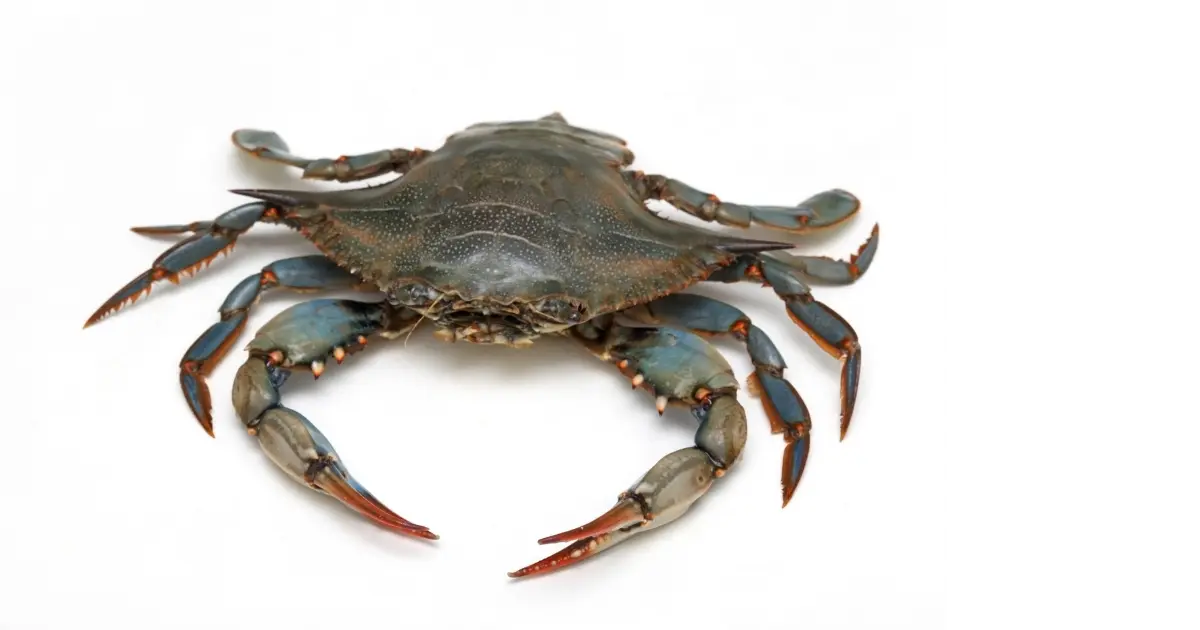
Crab clears Heat, brings down swelling, moves Blood stasis, and supports fracture healing. Its intensely cold and salty nature means it calls for careful balancing with warming foods. It is best eaten in Autumn when its flavor peaks, and it is traditionally served alongside warming ginger and rice wine to protect the middle burner from its cooling effects.
Crab is an exceptionally nutrient-dense seafood, providing outstanding levels of vitamin B12 (over 400% of the daily value per serving), selenium (approximately 65–73% DV), zinc, and copper. It is rich in high-quality protein (approximately 18–19g per serving) with minimal saturated fat, and provides meaningful omega-3 fatty acids (approximately 300–600mg per serving). Crab also contains iodine, supporting thyroid function.
Contraindications
Among the coldest foods in AHM — always balance with warm rice wine, ginger, or cinnamon to protect the middle burner. Avoid in Cold patterns, Spleen Yang deficiency, during pregnancy, or post-partum. Shellfish allergies. Traditional incompatibility with persimmon — combining the two can cause digestive distress.
Clinically authored and reviewed by Dr. Katrina Chojnicki-Hill, DAOM, AP, Dipl. OM. Cross-referenced against American Dragon Herbs and classical AHM sources. For educational purposes only — consult a qualified AHM practitioner for personalised advice.