Spices & Condiments
Cinnamon
肉桂Nutritional Value
3 / 5
Organ Affinities
Tonifies
Therapeutic Properties
Quick Facts
AHM Properties
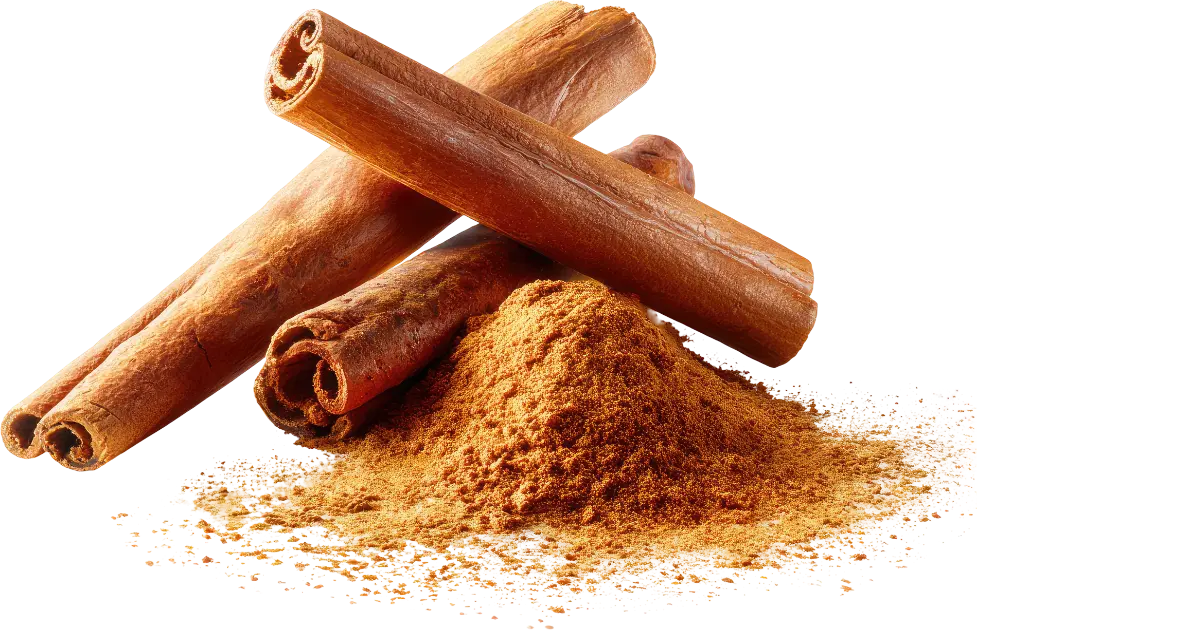
Cinnamon (Rou Gui) is among the most strongly warming foods in the AHM pharmacopoeia, directly supporting Kidney Yang and Ming Men fire. It moves cold out of the interior, warms the channels, activates Blood circulation, and relieves abdominal pain from cold patterns. Dietarily, it is used in cold deficiency conditions, cold hands and feet, low libido from Yang deficiency, and chronic cold-type menstrual pain.
Cinnamaldehyde and cinnamic acid in cinnamon inhibit inflammatory mediators including COX-2 and TNF-alpha with documented potency; cinnamon also has analgesic properties and a traditional role in AHM for relieving cold-type joint and abdominal pain.
Contraindications
Avoid in heat patterns, Yin deficiency with heat, bleeding conditions, or pregnancy. Powerful — use in small amounts.
Clinically authored and reviewed by Dr. Katrina Chojnicki-Hill, DAOM, AP, Dipl. OM. Cross-referenced against American Dragon Herbs and classical AHM sources. For educational purposes only — consult a qualified AHM practitioner for personalised advice.
Gui Zhi
twig · 桂枝
Herbs that Release the Exterior · Warm-Acrid Herbs (Release Wind-Cold)
Properties
Taste
Acrid, Sweet
Temperature
Warm
Entering Meridians
Heart, Lung, Urinary Bladder, (Liver), (Kidney)
Dosage
External conditions: 3–10g · Painful obstruction: 9–15g · Tincture: 1–3ml
Actions & Indications
Releases the Exterior, assists Yang, adjusts the Ying and Wei, and releases the muscle layer
Wind-Cold — Tai Yang Zhong Feng Stage (a person who catches cold easily)
Warms the channels and collaterals to relieve pain
Wind-Cold-Damp Bi (painful obstruction)
Unblocks Yang and transforms Qi and thin mucus
Edema due to Cold-Phlegm or Yang Qi Deficiency with urinary dysfunction, dizziness, and palpitations
Assists Heart Yang and warms and facilitates the flow of Yang Qi in the chest
Palpitations due to Yang obstruction in the chest from stagnation or deficiency; listless chest Yang with upward movement of phlegm and thin mucus, disorderly descent of Lung Qi with shortness of breath, chest and back pain, and palpitations; Heart and Spleen Yang Deficiency
Warms and facilitates the flow of Qi through the channels and collaterals, and Blood through the vessels
Wind-Cold-Damp Bi; Blood stasis due to Cold causing amenorrhea or dysmenorrhea, with or without abdominal masses
Warms the Middle and directs turbid Yin downward
Middle Jiao Yang Deficiency; Heart and Spleen Yang Deficiency (the patient often craves sweets)
Contraindications
- Contraindicated for warm febrile diseases.
- Contraindicated for Yin Deficiency with Heat signs.
- Contraindicated for heat in the Blood with vomiting.
- Use caution during pregnancy or with heavy menstruation (6g or less, dry-fried).
Herb/Drug Interactions
Concurrent use with diuretics such as chlorothiazide, hydrochlorothiazide, furosemide (Lasix), bumetanide (Bumex), and torsemide (Demadex) may lead to increased elimination of water and/or electrolytes.
Clinical Notes
- Used in most Wind-Cold conditions.
- Often used to provide a warming balance in cooling formulas.
- Often used in formulas to treat chronic pain.
- Has six therapeutic routes: harmonizing the Ying, unblocking the Yang, promoting urination, directing Qi downward, promoting movement, and tonifying the Middle.
- Said to increase leukocytes.
- Protects against the damaging effects of radiation.
Comparisons & Preparation Forms
Gui Zhi vs. Sang Zhi (Mulberry Twigs): Both unblock the collaterals. Gui Zhi is acrid and warm, making it more appropriate for Cold Bi, with a wider scope of action. Sang Zhi expels Wind and eliminates Dampness — it is slightly cooling and superior for Wind-Heat and Dampness, or when itching is prominent.
Gui Zhi Shao / Jian (Twig Tips): Greater capacity to unblock blood vessels and disperse Wind-Cold.
Gui Zhi Mu (Twig Wood): Less effective at mobilizing the exterior, releasing the muscle layer, and inducing sweat — but stronger at warming the channels and unblocking the collaterals.
Chao Gui Zhi (Dry-Fried): Milder acrid, dispersing action with increased warm, unblocking properties. Useful for older or weaker patients.
Zhi Gui Zi / Mi Zhi Gui Zhi (Honey-Prepared): Increased Yang tonifying action with reduced acrid dispersing action. Used to tonify the Middle Jiao.
Rou Gui
bark · 肉桂
Interior-Warming Herbs · Rescue Yang