Vegetables
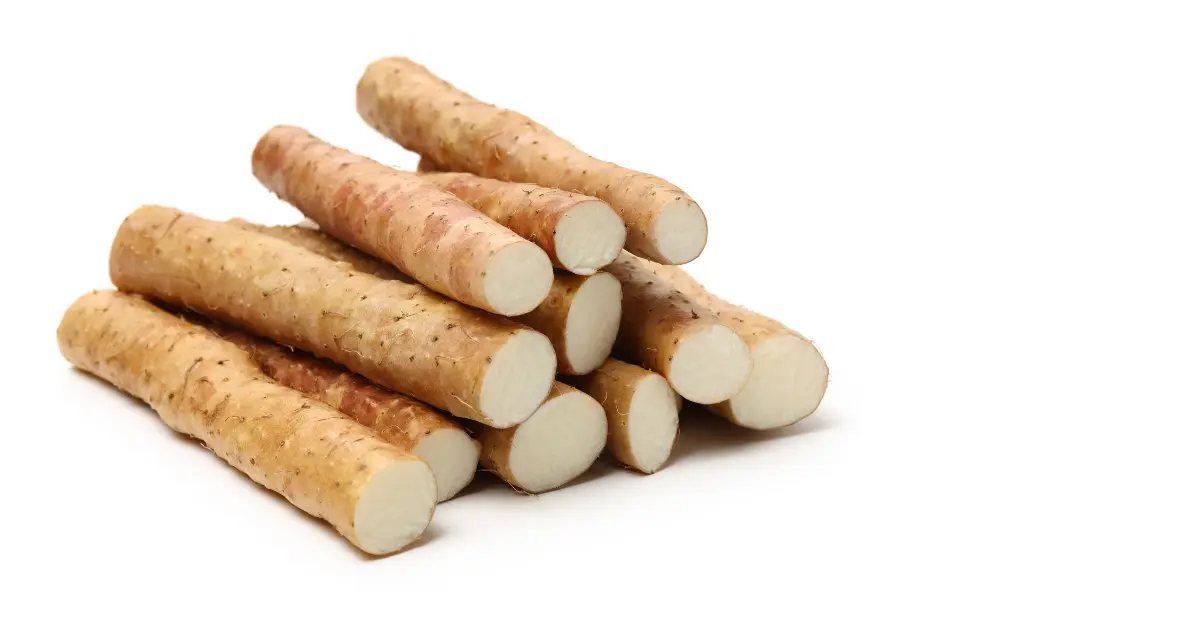
Chinese yam
山药shān yàoNutritional Value
5 / 5
Organ Affinities
Tonifies
Therapeutic Properties
Quick Facts
AHM Properties
Chinese yam (Shan Yao) holds a foundational place in AHM dietary therapy as one of the premier Spleen tonics and is classified as an herb that tonifies Qi. It simultaneously supports the Qi and Yin of the Lung, Spleen, and Kidney, making it an excellent choice for layered deficiency patterns. It tonifies the Spleen, nourishes Stomach Yin, and stops diarrhea. It tonifies Lung Qi and nourishes Lung Yin for chronic cough. It tonifies Kidney Yin and astringes Jing, addressing spermatorrhea, urinary frequency, and vaginal discharge. It also treats Xiao Ke (wasting and thirsting) due to Qi and Yin Deficiency. Long valued in longevity cooking for good reason.
Chinese yam is rich in complex carbohydrates and dietary fiber (approximately 4g per serving), with meaningful vitamin C (around 20% of the daily value per 100g) and very high potassium content (approximately 816mg per serving) along with manganese. It contains bioactive compounds including diosgenin, a steroidal saponin with documented anti-inflammatory properties, and allantoin, a soothing and reparative compound that supports tissue healing. Its mucilaginous nature helps soothe the digestive tract.
Contraindications
Incompatible with Gan Sui (Kansui root). Use with caution in excess Dampness, Damp-Heat patterns with abdominal distension, or conditions with stagnation — the sweet, astringent nature may worsen these patterns. Not for use in constipation with strong heat.
Clinically authored and reviewed by Dr. Katrina Chojnicki-Hill, DAOM, AP, Dipl. OM. Cross-referenced against American Dragon Herbs and classical AHM sources. For educational purposes only — consult a qualified AHM practitioner for personalised advice.